
More Than Just Food:
A Shared Agenda for Student Food Security and Success


This brief combines data and expertise from three leading national organizations in the student basic needs field: The Hope Center for Student Basic Needs, Trellis Strategies, and Swipe Out Hunger.
Across the datasets, a consistent picture emerges: student hunger remains widespread and interconnected with other hardships. We distill our shared evidence into five key findings and four actions institutions can take now to strengthen the affordability infrastructure students need to persist and thrive.
112,240
students
299
campuses leaders
3
surveys
Executive Summary
Student food insecurity remains one of the most persistent barriers to college completion in the United States. Yet the data across national datasets from our organizations also reveal a more complex reality: hunger rarely exists in isolation, many students remain disconnected from available supports, and campus food programs are increasingly being asked to address a growing affordability crisis with limited and unstable resources.
At a time of rising costs and increasing uncertainty around the public and institutional supports students rely upon, findings from The Hope Center, Trellis Strategies, and Swipe Out Hunger reveal five realities shaping student food insecurity today.
The challenge facing higher education is not whether students need support, but whether the systems designed to provide that support are strong enough to meet the need.
Click here to access methodological details and results tables, key definitions of terms frequently used in this brief, and to learn more about the contributing organizations.
Key Findings
I: Food insecurity remains widespread
Approximately four in ten college students experience food insecurity, underscoring that student hunger remains a pervasive challenge rather than an isolated occurence.
II: Food insecurity rarely occurs in isolation.
Students experiencing food insecurity frequently face housing insecurity, mental health challenges, transportation barriers, childcare challenges, and other forms of basic needs insecurity that can threaten their ability to persist and succeed.
III: Many students remain disconnected from available supports.
Awareness gaps, barriers to access, and challenges navigating resources continue to prevent students from utilizing programs designed to help meet their basic needs.
IV: Campus food programs are serving more students with limited resources..
Colleges and universities are distributing millions of meals and serving hundreds of thousands of students each year, yet many food access programs operate with limited staffing, unstable funding streams, and growing demand.
V: Food insecurity is closely linked to student success outcomes.
Food insecurity is associated with higher rates of stop-out risk, financial strain, and other barriers that can undermine persistence, completion, and economic mobility.
Executive Summary
Student food insecurity remains one of the most persistent barriers to college completion in the United States. Yet the data across national datasets from our organizations also reveal a more complex reality: hunger rarely exists in isolation, many students remain disconnected from available supports, and campus food programs are increasingly being asked to address a growing affordability crisis with limited and unstable resources.
At a time of rising costs and increasing uncertainty around the public and institutional supports students rely upon, findings from The Hope Center, Trellis Strategies, and Swipe Out Hunger reveal five realities shaping student food insecurity today.
The challenge facing higher education is not whether students need support, but whether the systems designed to provide that support are strong enough to meet the need.
Key Findings:
Approximately four in ten college students experience food insecurity, underscoring that student hunger remains a pervasive challenge rather than an isolated occurence.
Food insecurity remains widespread.

Food insecurity rarely occurs in isolation.

Students experiencing food insecurity frequently face housing insecurity, mental health challenges, transportation barriers, childcare challenges, and other forms of basic needs insecurity that can threaten their ability to persist and succeed.
Many students remain disconnected from available supports.

Awareness gaps, barriers to access, and challenges navigating resources continue to prevent students from utilizing programs designed to help meet their basic needs.

Campus food programs are serving more students with limited resources.


Colleges and universities are distributing millions of meals and serving hundreds of thousands of students each year, yet many food access programs operate with limited staffing, unstable funding streams, and growing demand.
Food insecurity is closely linked to student success outcomes.
Food insecurity is associated with higher rates of stop-out risk, financial strain, and other barriers that can undermine persistence, completion, and economic mobility.



Student food insecurity is not new. But the systems students rely on to afford college—and daily life—are being tested in new ways.
Students are navigating the highest costs of attendance in modern history amid rising rents, persistent food inflation, increasing healthcare costs, and growing financial uncertainty. At the same time, recent federal and state policy changes—including disruptions tied to government funding instability, the ongoing SNAP cliff, and provisions within the One Big Beautiful Bill (OBBB)—threaten to weaken many of the supports students depend on to meet their basic needs.
These pressures arrive at a pivotal moment.
Over the last decade, colleges and universities have invested significantly in food access initiatives, including campus pantries, meal-sharing programs, benefits navigation efforts, emergency aid programs, and basic needs centers. Yet national data continue to show that millions of students struggle to access enough food to support their academic success and we came together to develop a shared evidence base about the current state of student food security and the ways in which it intersects with other forms of basic needs insecurity.

Student food insecurity is not new. But the systems students rely on to afford college—and daily life—are being tested in new ways.
Students are navigating the highest costs of attendance in modern history amid rising rents, persistent food inflation, increasing healthcare costs, and growing financial uncertainty. At the same time, recent federal and state policy changes—including disruptions tied to government funding instability, the ongoing SNAP cliff, and provisions within the One Big Beautiful Bill (OBBB)—threaten to weaken many of the supports students depend on to meet their basic needs.
These pressures arrive at a pivotal moment.
Over the last decade, colleges and universities have invested significantly in food access initiatives, including campus pantries, meal-sharing programs, benefits navigation efforts, emergency aid programs, and basic needs centers. Yet national data continue to show that millions of students struggle to access enough food to support their academic success and we came together to develop a shared evidence base about the current state of student food security and the ways in which it intersects with other forms of basic needs insecurity.

Each organization brings a distinct lens to this work.
Both Trellis and The Hope Center document the prevalence and severity of student food insecurity. They also examine how food insecurity intersects with housing insecurity, mental health challenges, childcare responsibilities, transportation barriers, and student success outcomes. The Hope Center works with institutional leadership and Swipe Out Hunger works with student leaders and campus administrators to advance on-campus solutions, build an active network of advocates against college food insecurity, and change the narrative on the issue.
While our methodologies differ, our findings point toward a shared conclusion. Food insecurity:
Each organization brings a distinct lens to this work.
Both Trellis and The Hope Center document the prevalence and severity of student food insecurity. They also examine how food insecurity intersects with housing insecurity, mental health challenges, childcare responsibilities, transportation barriers, and student success outcomes. The Hope Center works with institutional leadership and Swipe Out Hunger works with student leaders and campus administrators to advance on-campus solutions, build an active network of advocates against college food insecurity, and change the narrative on the issue.
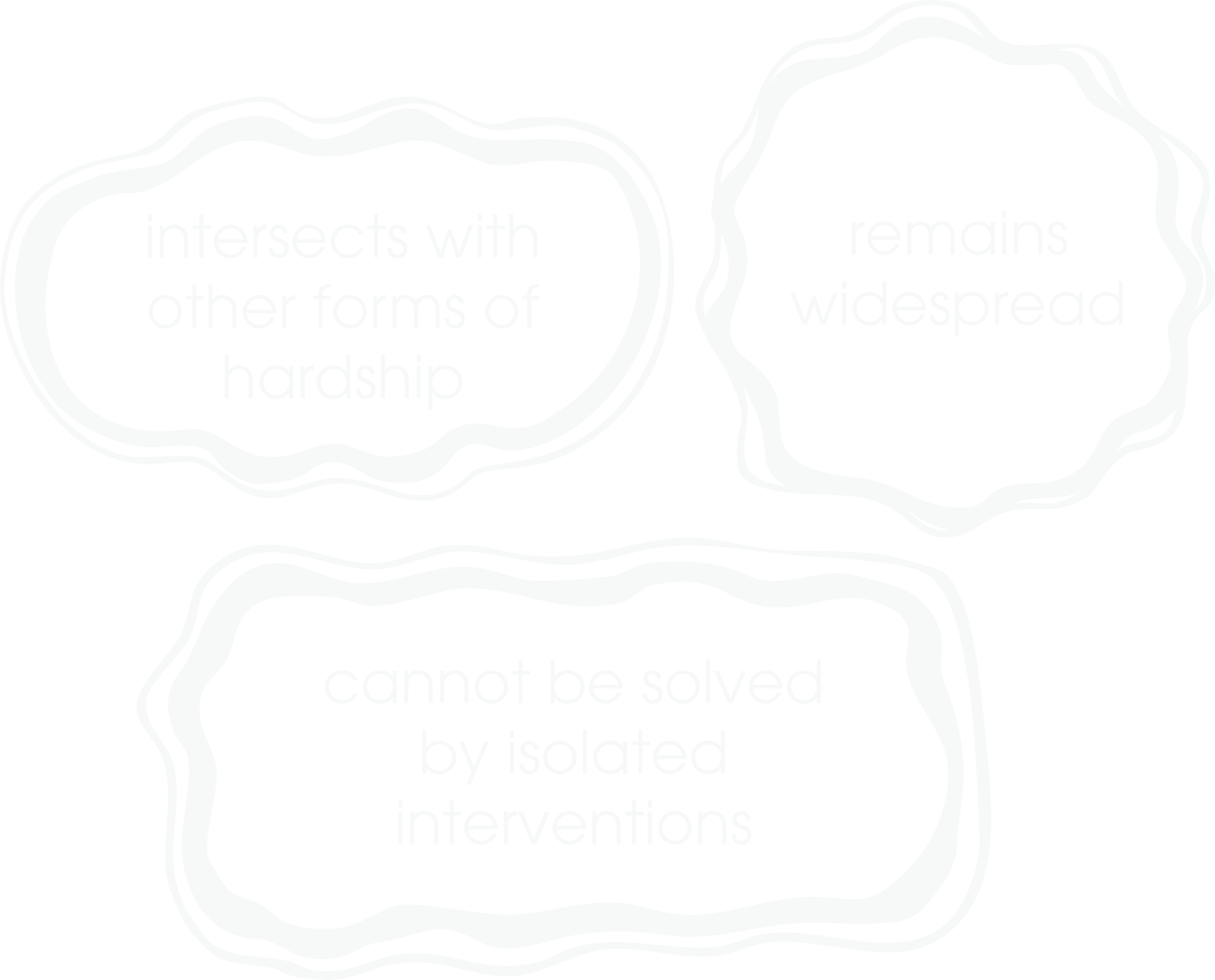
While our methodologies differ, our findings point toward a shared conclusion. Food insecurity:
remains widespread
intersects with other forms of hardship
cannot be solved by isolated interventions

The findings in this brief suggest that:
student need remains high,
campus supports remain essential,
and the systems designed to help students meet their basic needs require greater investment, coordination, and sustainability.
At a moment when institutions are being asked to do more with less, this brief offers a shared understanding of both the scale of the challenge and the opportunities for action.
More importantly, it offers a clear, aligned message: student hunger is not simply a food issue. Combatting it requires building systems that support basic needs affordability as a whole so students learn, persist, and thrive.
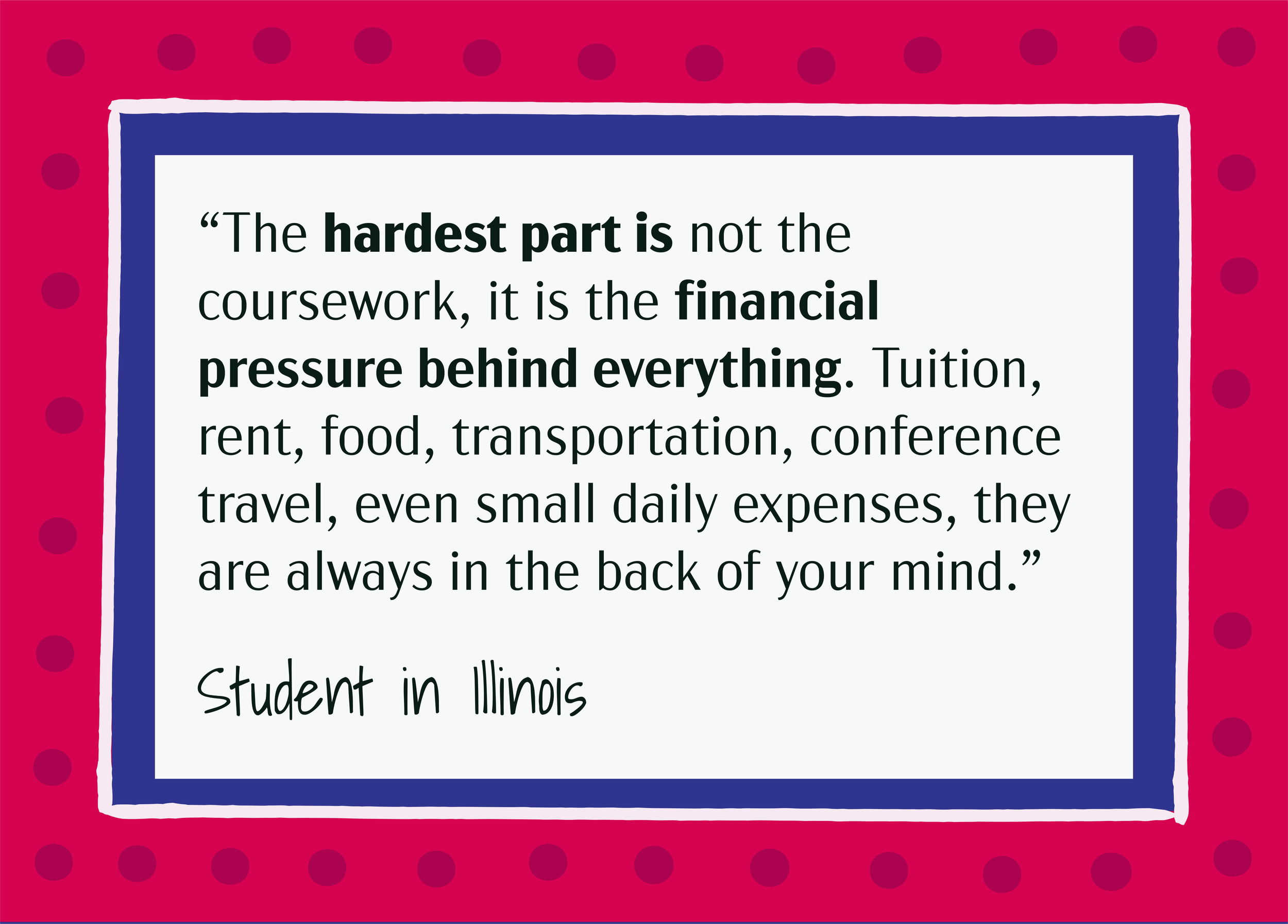
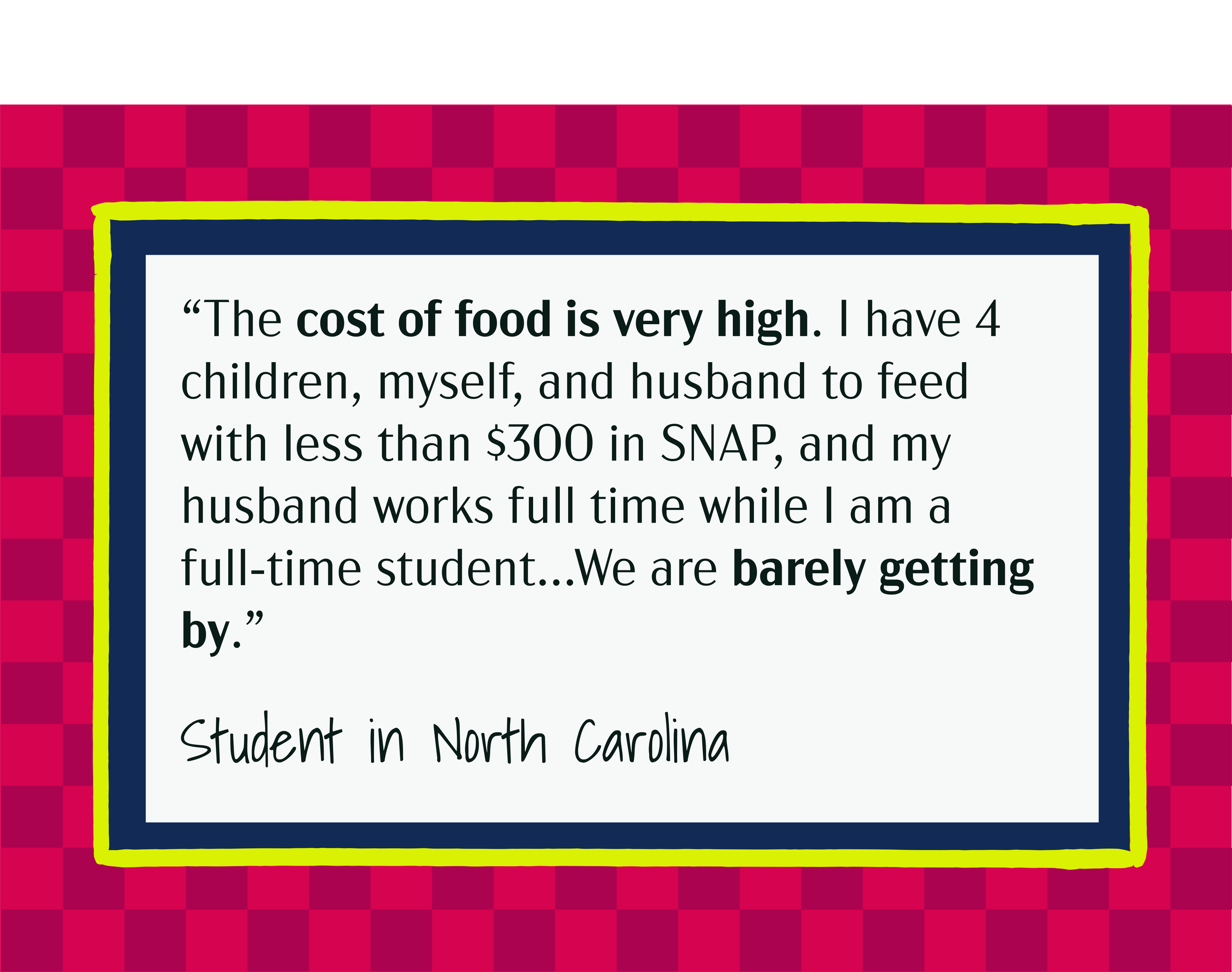
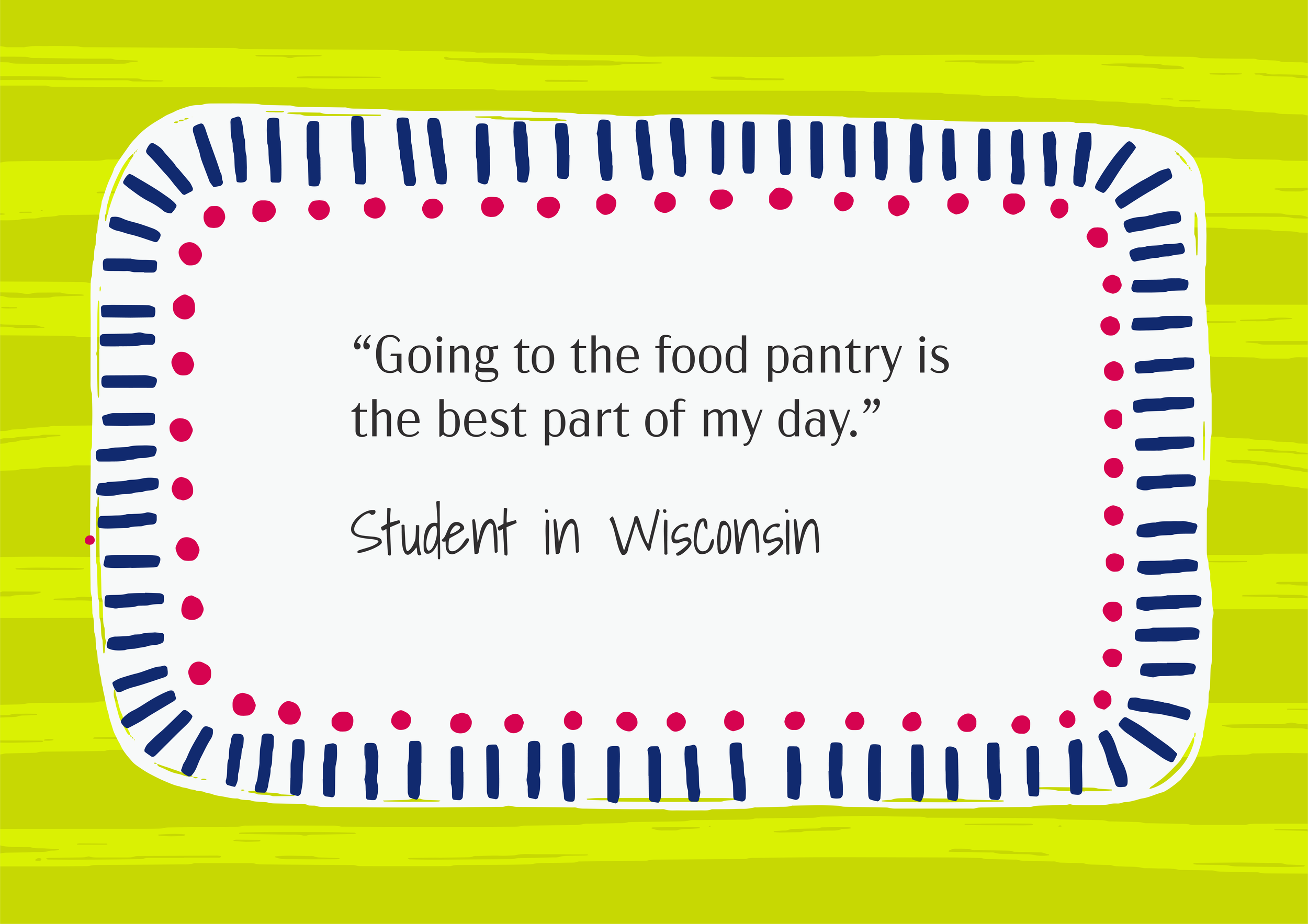
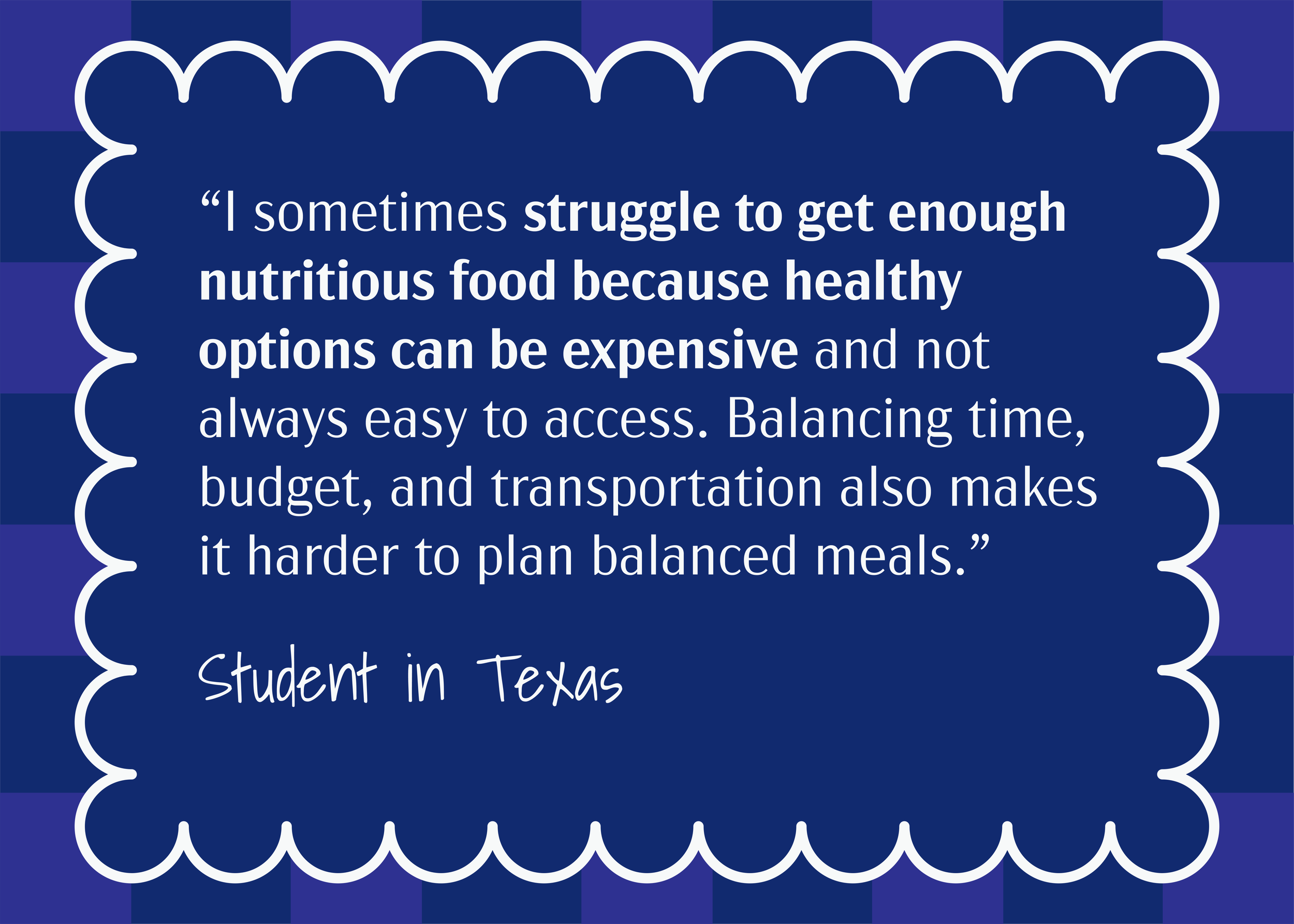
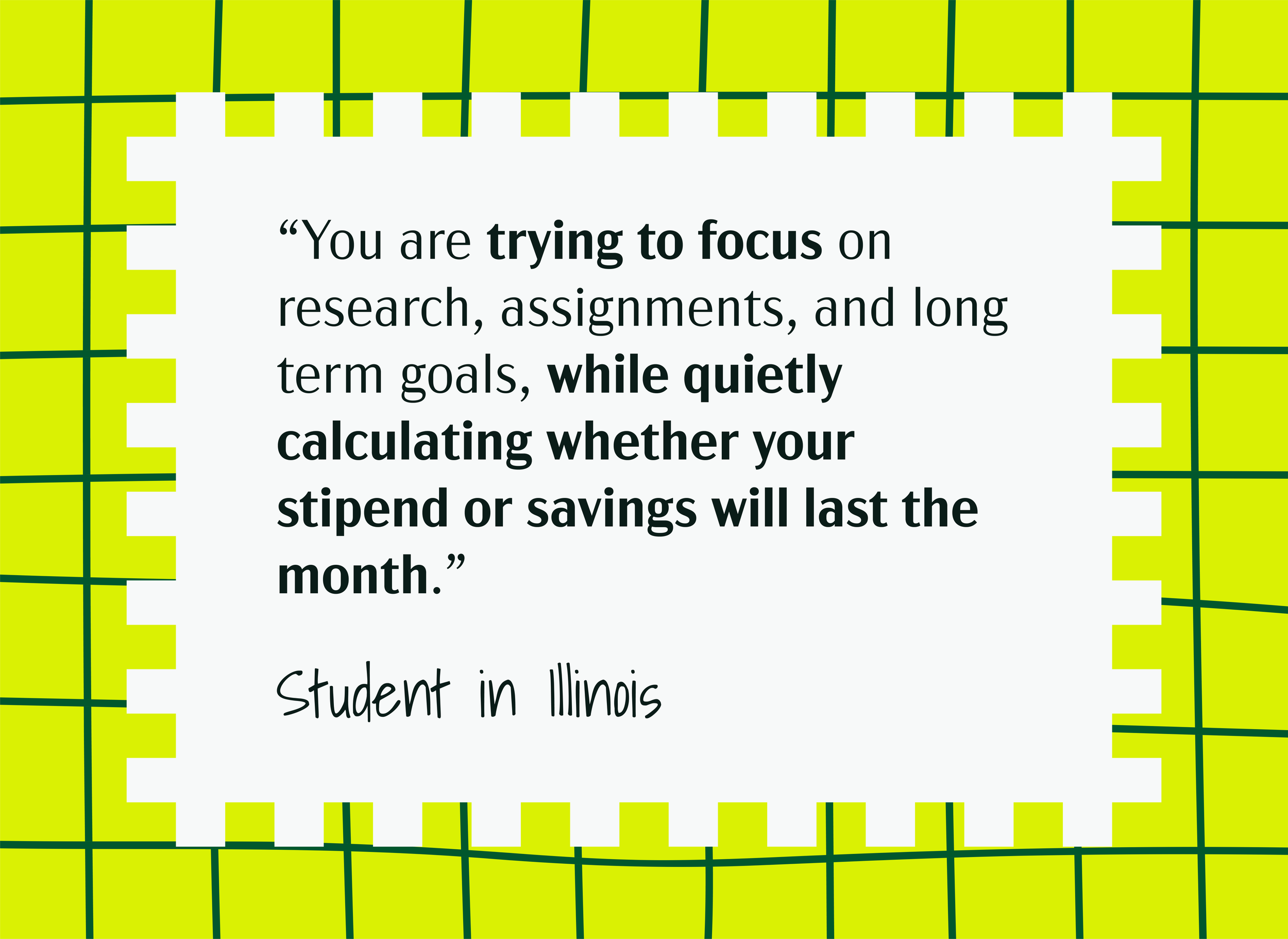
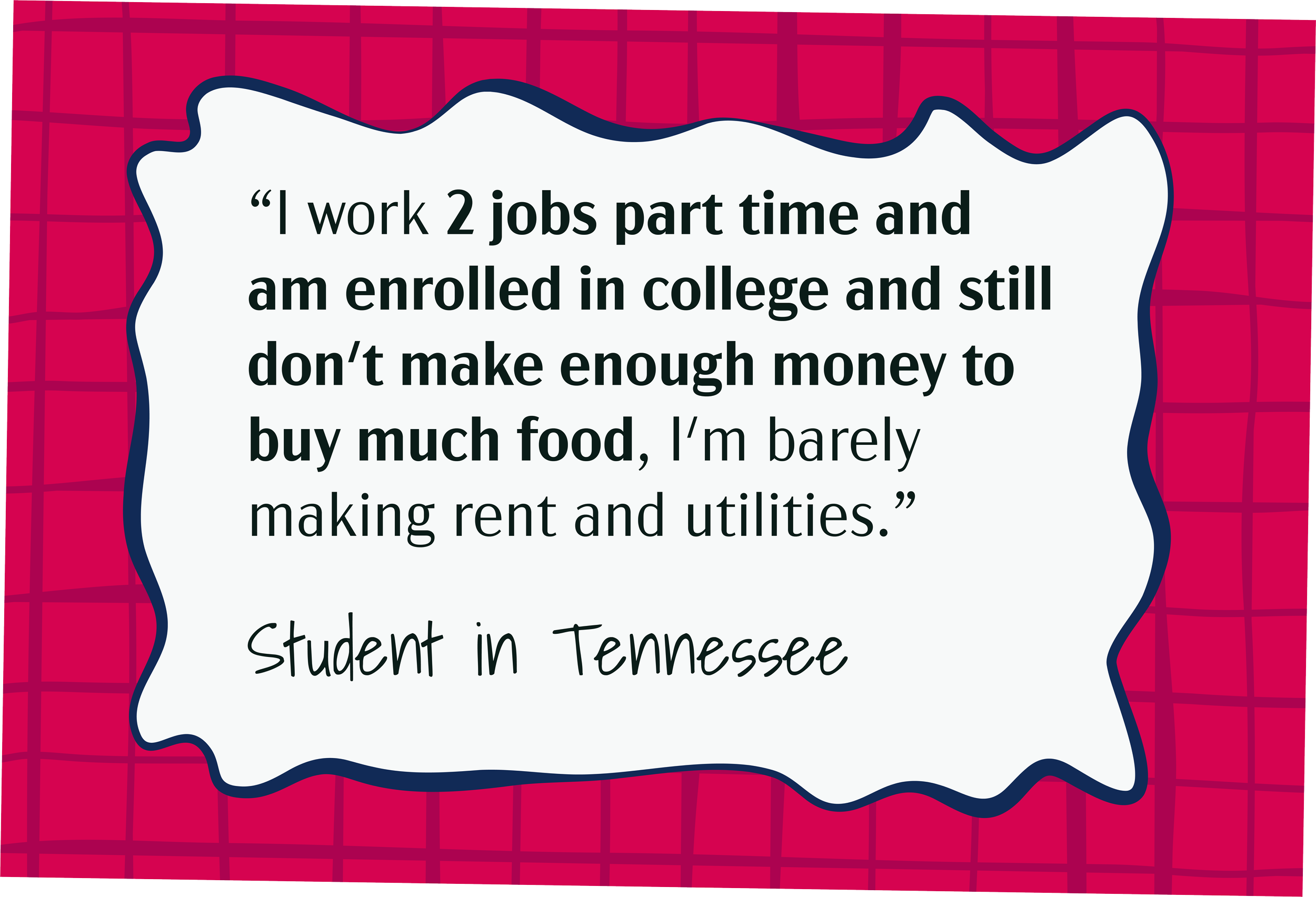
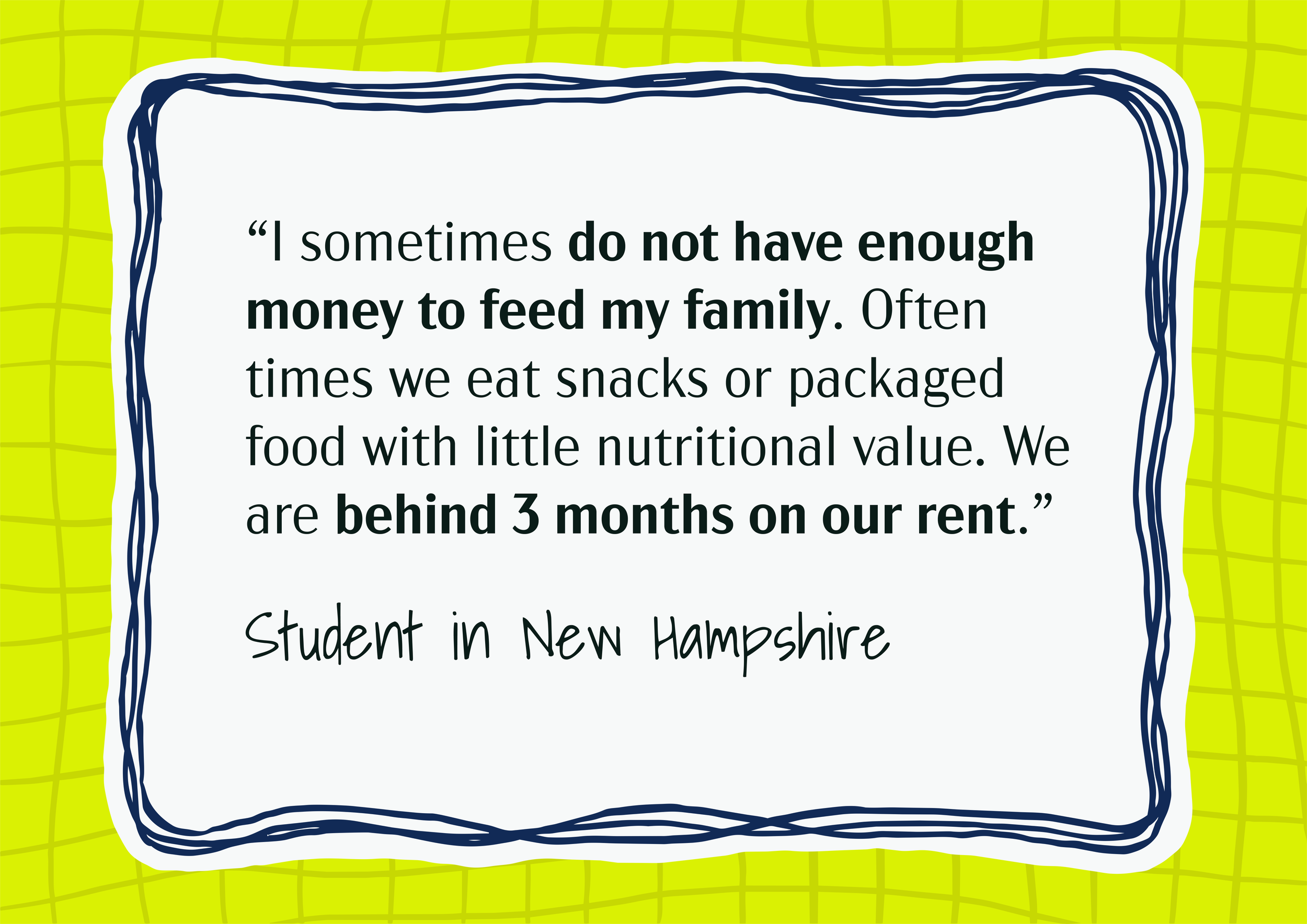
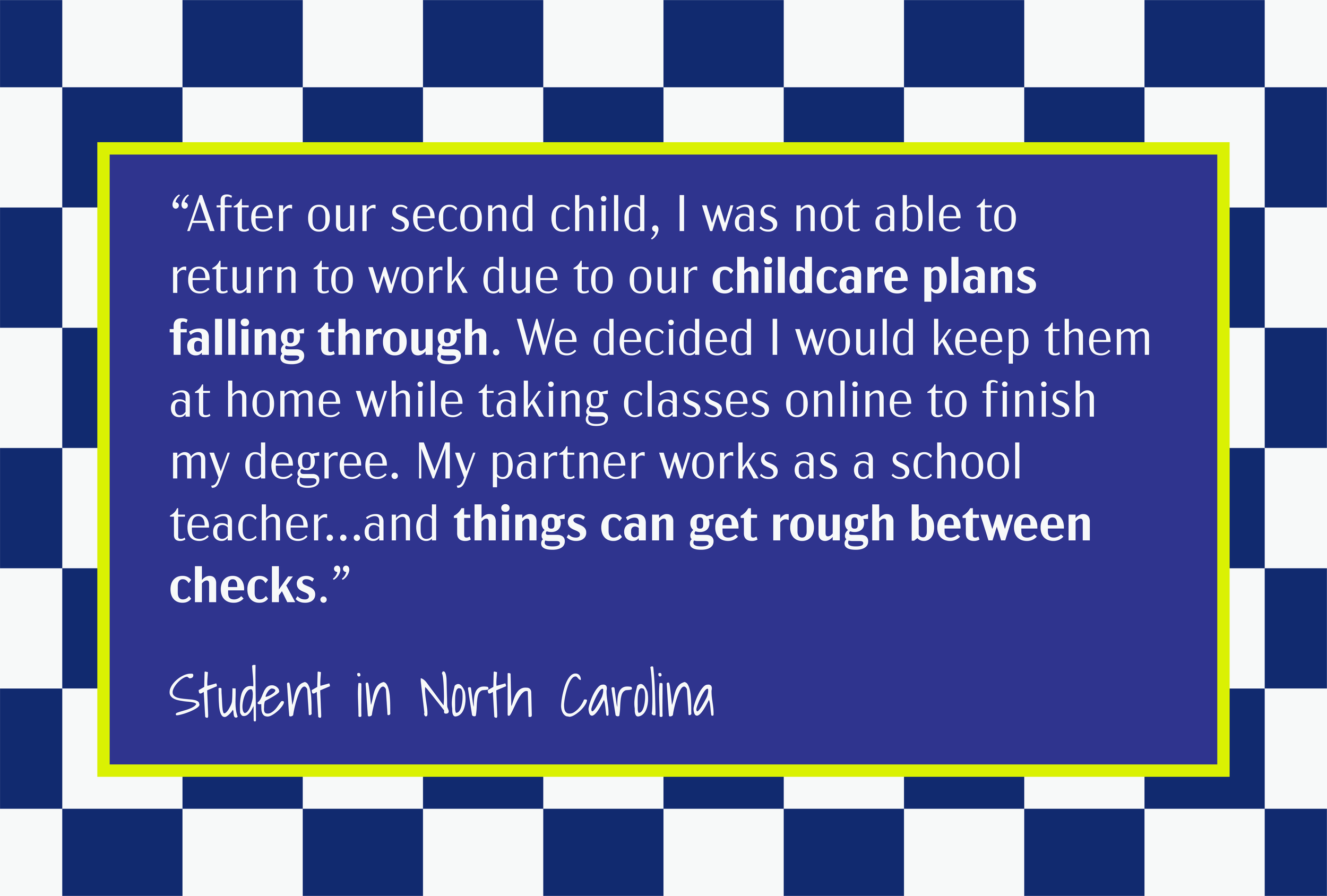
Click to Shuffle Through Students’ Experiences with Food Insecurity, in Their Own Words:
The findings in this brief suggest that:
student need remains high,
campus supports remain essential,
and the systems designed to help students meet their basic needs require greater investment, coordination, and sustainability.
At a moment when institutions are being asked to do more with less, this brief offers a shared understanding of both the scale of the challenge and the opportunities for action.
More importantly, it offers a clear, aligned message: student hunger is not simply a food issue. Combatting it requires building systems that support basic needs affordability as a whole so students learn, persist, and thrive.
-
Basic Needs: A persistent lack of access to essential resources necessary for maintaining health, wellbeing, and academic success, including adequate housing, food, health care and mental health services, child care, internet connectivity, and transportation.
Food security: The economic and social condition of adequate access to food
Food insecurity: The economic and social condition of limited or uncertain access to adequate food, characterized by reduced quality, variety, or desirability of diet or disrupted food intake. (USDA)
Student retention: The ability of educational institutions to keep students enrolled from semester to semester and ultimately through graduation. (EBSCO)
-
Student data presented in this report come from The Hope Center's Student Basic Needs Survey (47,416 student responses from 74 colleges and universities in 14 states between Fall 2024 and Spring 2026) and Trellis' Student Financial Wellness Survey (65,816 student responses 153 colleges and universities in 22 states between October 20 and November 11, 2025. Campus leader data presented in this report come from Swipe Out Hunger's Campus Leader Survey (completed by 299 campuses in Spring 2026). Methodological details and results tables are available in the Appendix.


Section I: Student Hunger Remains Widespread
Section II: Hunger Rarely Happens Alone
Section III: The Support Gap
Section IV: Campuses Are Responding—But Capacity Is Strained
Section V: What Institutions Can Do Now

I: Student Hunger Remains Widespread

Food insecurity continues to affect a substantial share of college students nationwide. Both the Hope and Trellis surveys revealed that food insecurity is common and is not limited to any particular institution type or student group.

More than 40% of two-year students reported being food insecure (low or very low food security) in the 30 days prior to taking the survey.

More than 30% of four-year students reported being food insecure (low or very low food security) in the 30 days prior to taking the survey.
Food insecurity is common across student populations, but rates are even higher among groups that are historically underserved in higher education (Black students, Hispanic or Latine students, parenting students, LGBTQIA+ students).
Black students were more likely to experience food insecurity than their White peers.

Note: The bar graph above displays data from Trellis' Student Financial Wellness Survey. The graphics below display data from The Hope Center's Student Basic Needs Survey. Patterns of results are consistent across the two surveys.Almost half of students (44%) in Hope’s sample reported that they could not afford to eat balanced meals, and 30% reported that they had cut the size of their meals or skipped meals. Among parenting students, food insecurity challenges affect their children as well: 1 in 4 parenting students (23%) reported that they could not afford to give their children balanced meals, and 1 in 12 (8%) reported that they had to cut the size of their children’s meals or have their children skip meals.
Food insecurity is common across student populations, but rates are even higher among groups that are historically underserved in higher education (Black students, Hispanic or Latine students, parenting students, LGBTQIA+ students).
The graphics below display data from The Hope Center's Student Basic Needs Survey. Patterns of results are consistent across the two surveys.
Almost half of students (44%) in Hope’s sample reported that they could not afford to eat balanced meals, and 30% reported that they had cut the size of their meals or skipped meals. Among parenting students, food insecurity challenges affect their children as well: 1 in 4 parenting students (23%) reported that they could not afford to give their children balanced meals, and 1 in 12 (8%) reported that they had to cut the size of their children’s meals or have their children skip meals.

34% of non-parenting students experienced food insecurity.

53% of parenting students experienced food insecurity.

43% of LGBTQIA+ students experienced food insecurity.

34% of non-LGBTQ+ students experienced food insecurity.
53% of parenting students experienced food insecurity.
43% of LGBTQIA+ students experienced food insecurity.

II: Hunger Rarely Happens Alone
Food insecurity is often one symptom of broader instability.
Students experiencing food insecurity often face multiple, interconnected challenges that can compound one another and increase the risk of academic disruption. Data from both Trellis and Hope show that students who experienced food insecurity are more likely to experience other forms of basic needs insecurity, including housing insecurity, homelessness, and mental health challenges compared to their food secure peers.
Food insecure students in the Hope survey also had higher rates of technology access challenges and transportation challenges, and Trellis data demonstrate a correlation between food insecurity and missing classes due to lack of transportation or conflicts with their jobs.
Compared to their food secure peers, both Hope and Trellis data show that food-insecure students are more likely to also experience challenges accessing other basic needs. According to data from the Trellis Student Financial Wellness Survey:

19% of food secure students experienced housing insecurity.

58% of food insecure students experienced housing insecurity.

21% of food secure students experienced depression.

13% of food secure students missed at least one day of classes due to lack of reliable transportation.

29% of food insecure students missed at least one day of classes due to lack of reliable transportation.
58% of food insecure students experienced housing insecurity.

42% of food insecure students experienced symptoms of depression.
21% of food secure students experienced depression.
29% of food insecure students missed at least one day of classes due to lack of reliable transportation.


III: The Support Gap
Despite the difficulties many students face, a substantial number are not connected with available supports. The issue is not only whether resources exist, but whether students know about them, trust them, and can access them when needed.
Trellis data show that among students experiencing food insecurity, 34 percent of respondents at two-year institutions and 41 percent of four-year respondents were either unaware that their campus had a food pantry or incorrectly believed that no such resource existed. Similarly, about a quarter of food insecure respondents in the Hope data reported being unaware of the on-campus food pantry at their institution.
Many Students at Two-Year Institutions are Unaware That Their Campus Has a Food Pantry.
Student Responses to the Question: “Does Your Campus Have a Food Pantry?” at Two-Year Institutions
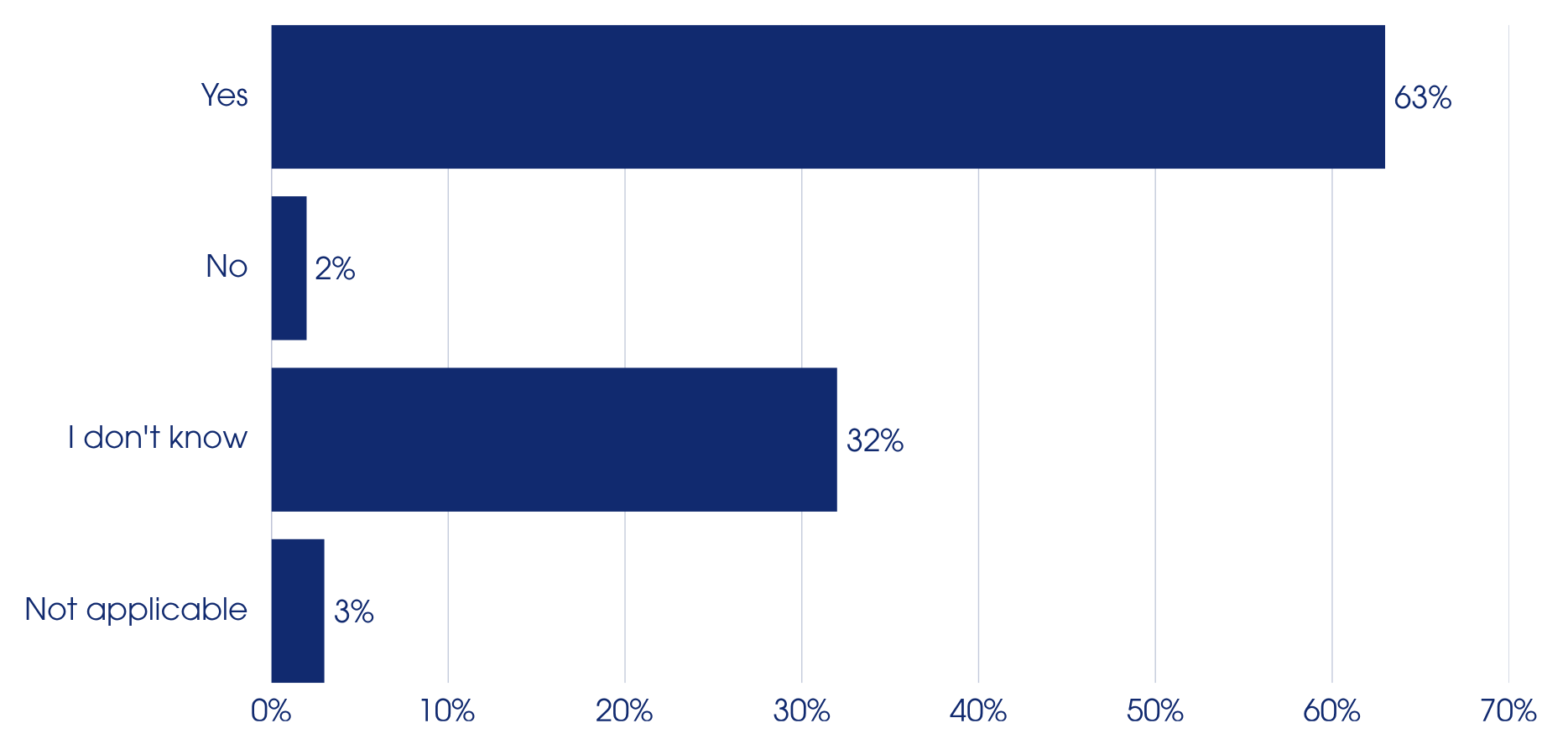
Note: Calculation includes only respondents at institutions that had a food pantry. Values are the proportion of respondents from two-year institutions who provided each response. Data from Trellis' Student Financial Wellness Survey item "Does your school have a food pantry or food closet on campus?" Many Students at Four-Year Institutions are Unaware That Their Campus Has a Food Pantry.
Student Responses to the Question: “Does Your Campus Have a Food Pantry?” at Four-Year Institutions
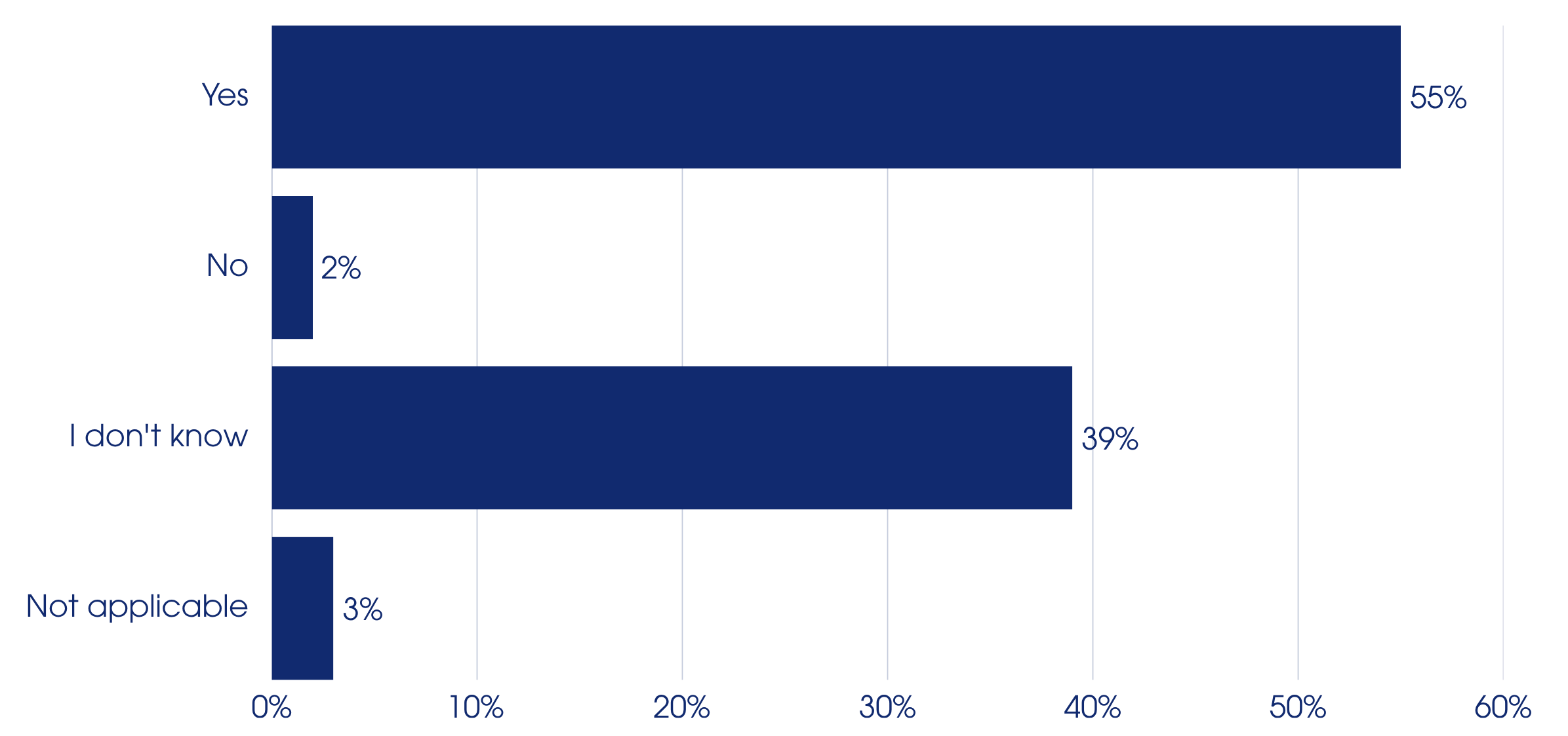
Note: Calculation includes only respondents at institutions that had a food pantry. Values are the proportion of respondents from four-year institutions who provided each response. Data from Trellis' Student Financial Wellness Survey item "Does your school have a food pantry or food closet on campus?" 
Even among students experiencing food insecurity, use of food resources remains limited.
In the Hope data, just 24 percent of food insecure respondents reported using an on-campus food pantry since the beginning of the year. In the Trellis data, 27 percent reported visiting a food pantry, either on or off campus.
Utilization of the Supplemental Nutrition Assistance Program (SNAP) benefits was even lower. Only 20 percent of food insecure respondents in the Hope data, and 24 percent in the Trellis data, reported receiving SNAP benefits. Further, over half (57 percent) of food insecure respondents in the Trellis data had not visited a food pantry or received SNAP benefits. These findings suggest that many students experiencing food insecurity remain disconnected from resources designed to support them, highlighting an important opportunity for institutions to strengthen awareness, outreach, and access efforts.
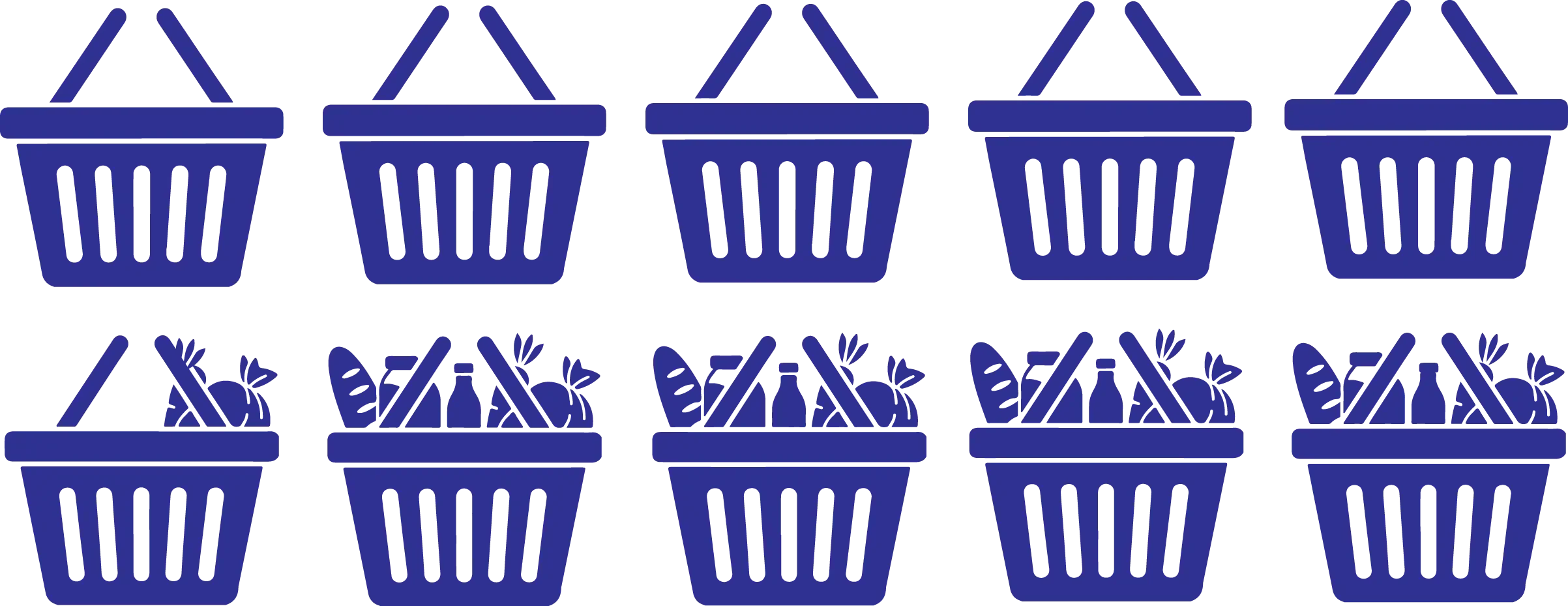
57% of students experiencing food insecurity accessed neither food pantries nor SNAP benefits.


Only 10% of students experiencing food insecurity utilized both food pantries and SNAP benefits.
When food insecure students were asked about the barriers they experience in accessing campus benefits, the most common (reported by 76% of food insecure students) was that students were not made sufficiently aware of what supports were available or who was eligible to use them. Students also reported that resources were only available when they were in class or at work (31%) and that even though they themselves were food insecure, they worried about taking resources that other students might need more (29%). Stigma around accessing resources was still a factor as well, with 10% of students reporting that barrier.

For food insecure students, the greatest barrier to accessing campus basic needs resources is a lack of awareness.
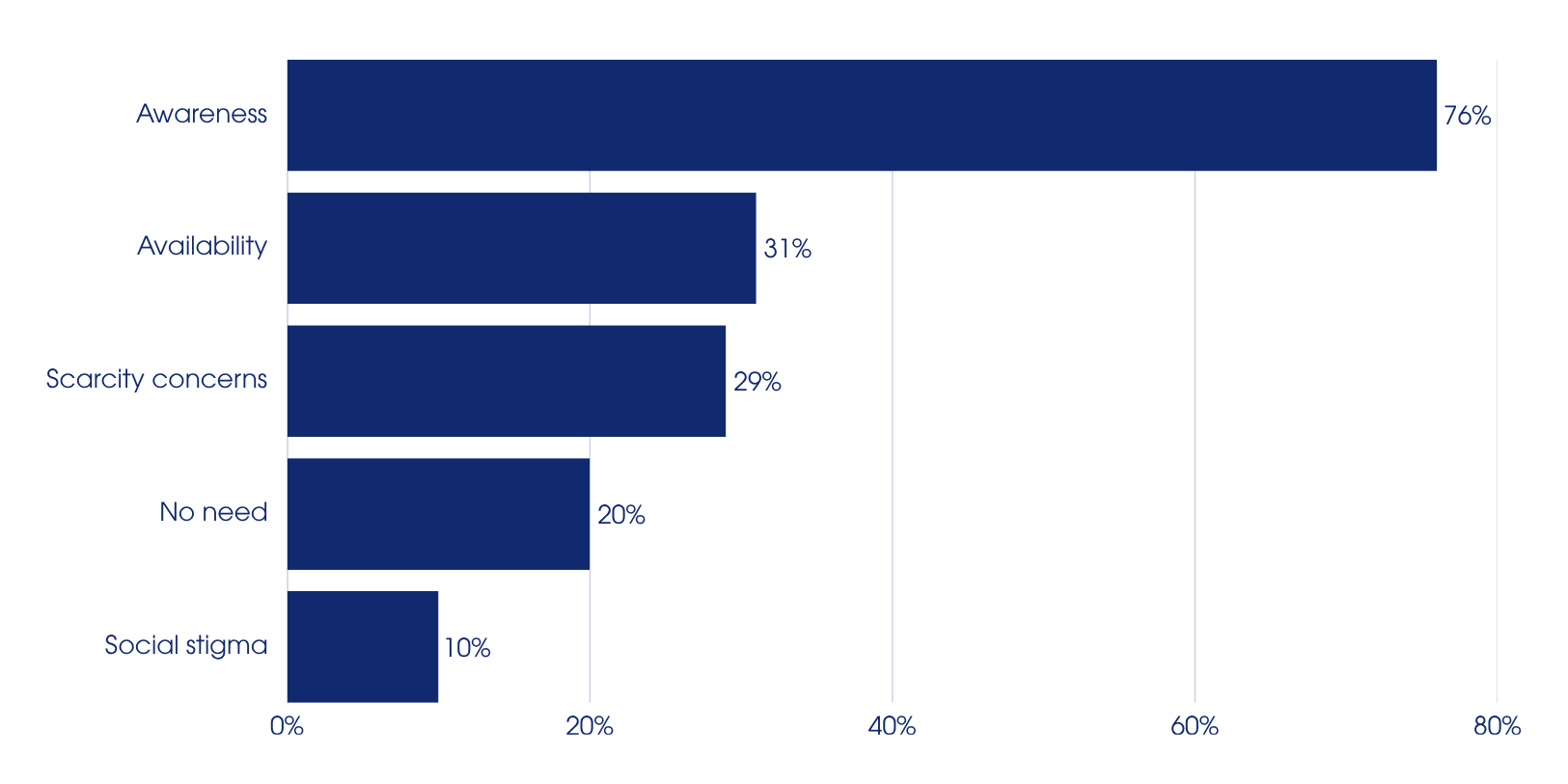
Note: Values are the proportion of food insecure respondents who reported experiencing that barrier to accessing campus basic needs resources (students could select all barriers that applied). Awareness barriers included students not knowing that the resources existed, whether they were eligible, or how to access the resources. Availability barriers included not having enough time or having other obligations when services were available. Scarcity concerns included other people needing resources more than they did. No need indicates students reported they did not need resources. Social stigma included concerns about how other might view them or being mistreated due to their identities. Data from The Hope Center's Student Basic Needs Survey. 
IV: Campuses Are Responding—But Capacity Is Under Strain
The number of campuses with food security programs continues to grow. As of the summer of 2026, over 1,000 campuses—accounting for roughly one in four degree-granting institutions across the United States—have partnered with Swipe Out Hunger to address food insecurity.


Food insecurity looks different on every campus, as do the resources, infrastructure, and capacity to address it. Common forms of food support include:
IV: Campuses Are Responding—But Capacity Is Under Strain
The number of campuses with food security programs continues to grow. As of the summer of 2026, over 1,000 campuses—accounting for roughly one in four degree-granting institutions across the United States—have partnered with Swipe Out Hunger to address food insecurity.
Food insecurity looks different on every campus, as do the resources, infrastructure, and capacity to address it. Common forms of food support include:

On-campus food pantries that provide free resources to students. While many of these pantries focus only on food, a number of them also provide hygiene products, baby care products, clothing, cookware, and other necessities.

Enrollment support for supplemental food programs like SNAP or CalFresh.


Meal swipe distribution programs, which allow students to donate unused campus dining credits to students who have run out of meal swipes or do not have a meal plan.

Small gift cards to local grocery stores or restaurants for students in immediate need of food.

Pre-prepared food bags for academic breaks to provide students with groceries, including holiday meal kits, while other campus resources are unavailable.
The immense impact of these programs is often in spite of limited and inconsistent resources.
$1,500
Median Estimated Program Budget
$11,000
Median Actual Program Cost
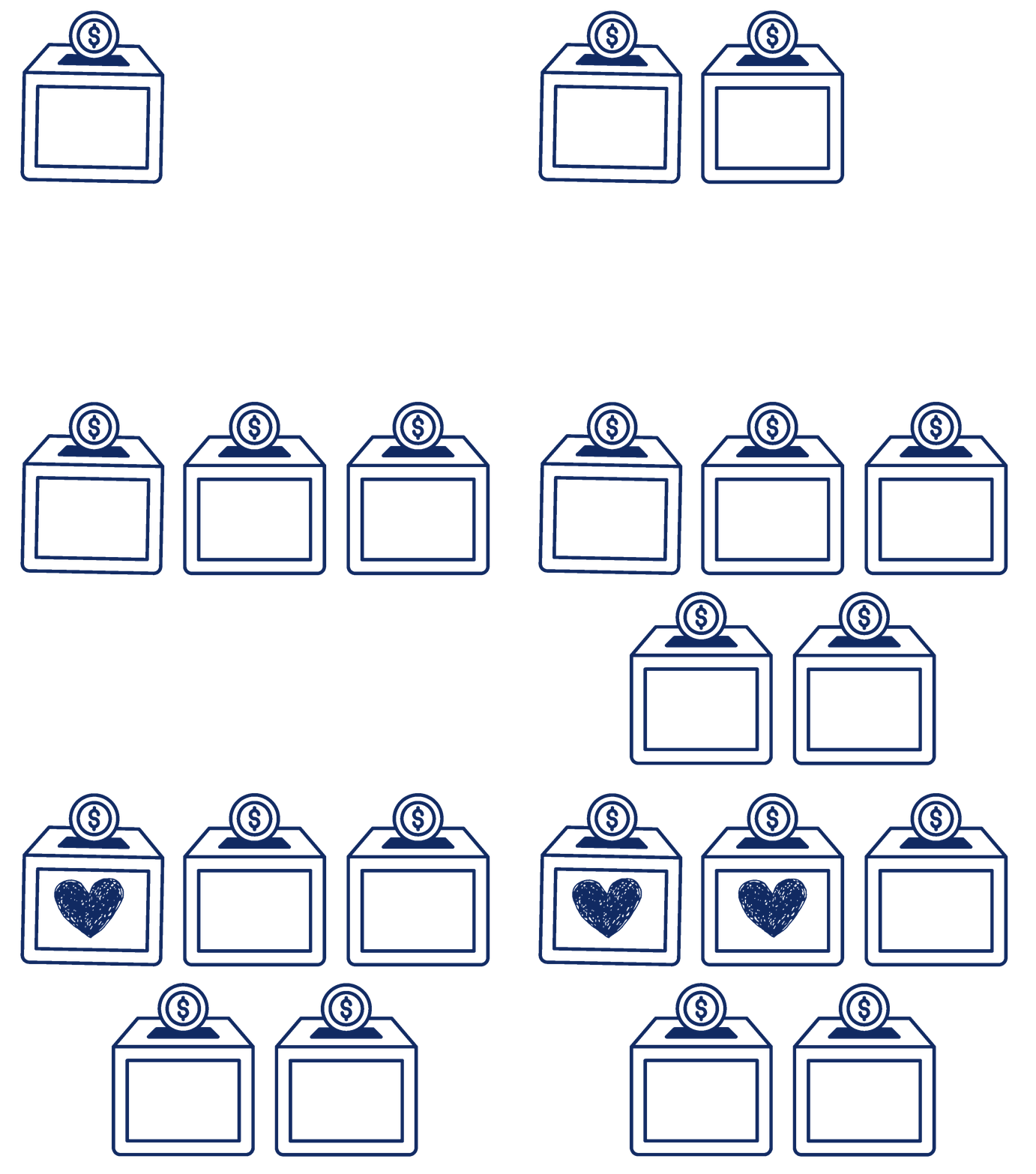
Over 40% of schools rely on donations as their primary funding source for food security resources.
“Being fortunate to continue to receive grants each year has allowed us to increase our food options and hygiene items on a regular basis. Without grants, such as the Swipe Grant, we would only be able to fund the essential food items weekly and would likely run out regularly.”
A Campus Administrator in Colorado
The immense impact of these programs is often in spite of limited and inconsistent resources.

Over 40% of schools rely on donations as their primary funding source for food security resources.
What Institutions Can Do Now
Institutions are making a significant difference in college food insecurity despite limited resources. With the proper financial and structural resources, college food insecurity is solvable. To achieve this, actors both within and outside of higher education need to build coordinated systems and shift away from isolated interventions.

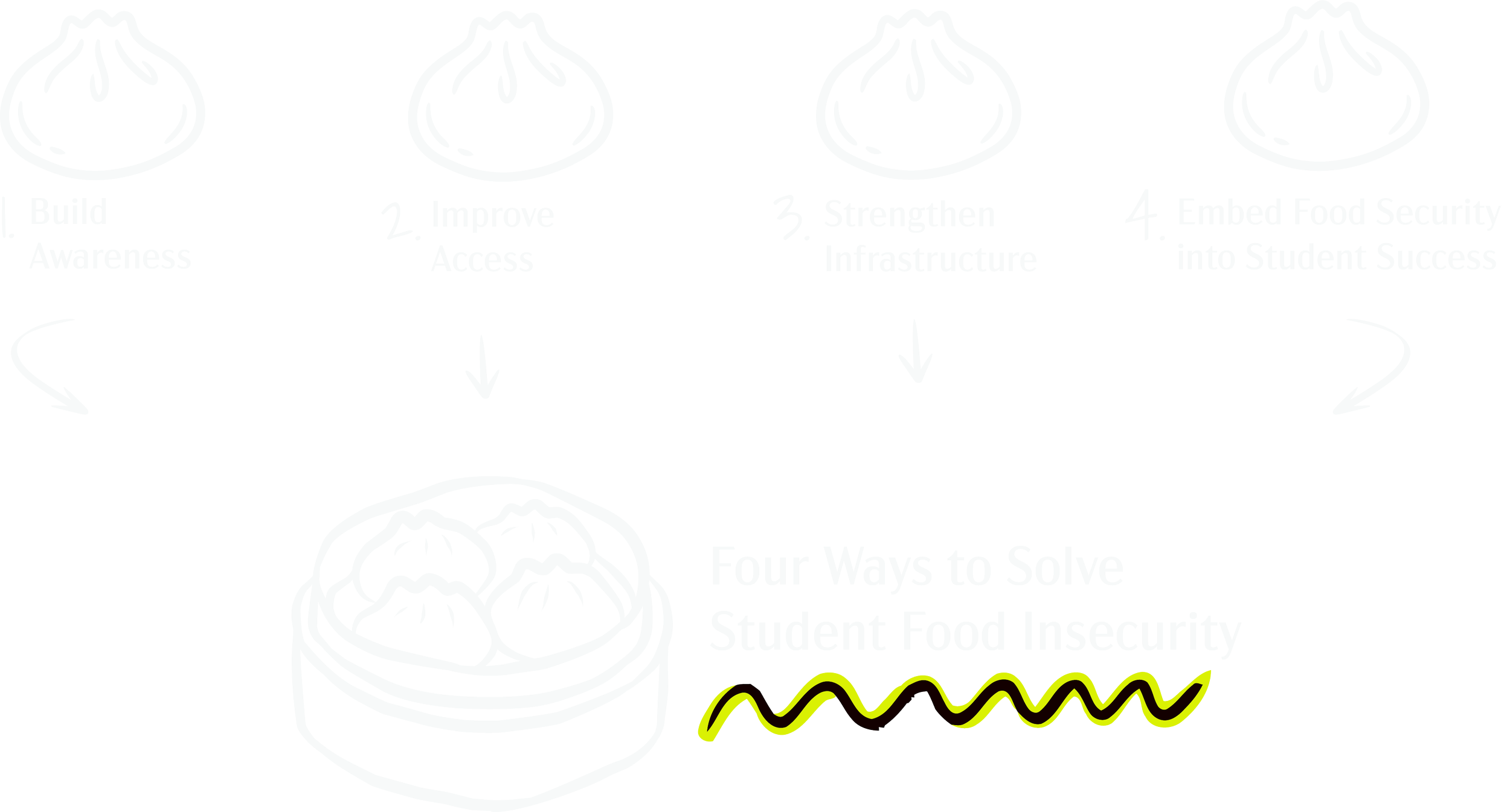
We suggest four ways to shift the needle toward this outcome:
What Institutions Can Do Now
Institutions are making a significant difference in college food insecurity despite limited resources. With the proper financial and structural resources, college food insecurity is solvable. To achieve this, actors both within and outside of higher education need to build coordinated systems and shift away from isolated interventions.
We suggest four ways to shift the needle toward this outcome:
Build Awareness
Improve Access
Strengthen Infrastructure
Embed Food Security into Student Success
Build Awareness
As discussed, many students remain unaware of the support systems that are currently available to them. Even when students are aware, stigma and a reluctance to use resources that others might need more can lead to feelings of shame about using these resources.
Students, campus staff, and their communities need to normalize conversations about basic needs and make it clear that all students have access to resources. Many students have indicated feeling more comfortable discussing basic needs insecurity with their peers, making student voices even more essential in this space. Some schools have also integrated information about their on-campus basic needs resources into orientation and campus tours. Regardless of the approach, campuses need to have strong communication strategies that not only reach their students, but properly engage and inform them about basic needs insecurity.
“One recent spring, the Art Department partnered with the campus cupboard to host a gallery exhibition inside the pantry space itself. The show was themed “Food for Thought” and featured student artwork about nourishment, resilience, and community. The art opening invited students who might not otherwise visit the pantry to come in, browse the pieces, and see the cupboard as a place of dignity and expression, not only need. A student remarked after seeing a peer’s painting, ‘I felt seen,’ and began visiting the pantry regularly.”
A campus administrator in New Mexico
Improve Access
Food support systems are only as good as the community’s ability to access them.
When planning these systems, campuses need to consider their students’ specific barriers to food access and ways to navigate them. This can include expanding or altering food pantry hours when possible; finding options for food distribution that don’t require staff or volunteers, such as food lockers or grab-and-go shelves; and empowering campus faculty to play a stronger role in food security support.
In addition to what is available on campus, institutions should consider ways to improve access for public benefits like SNAP or CalFresh. Many schools now offer SNAP enrollment support, which can be a valuable resource for the over 2 million students that are not receiving SNAP benefits despite being eligible.
“Becoming independent is such a scary thing, so having someone like the Basic Needs Coordinator help me apply for SNAP has truly changed my life and has helped me become more financially independent. I don’t have to worry about where my next meal will come from as I now have access to SNAP, something I didn’t know existed.”
A student in Oregon

St. Cloud State University
Since its founding in 2020, staff at St. Cloud State University’s Huskies Food Pantry have continued to seek new ways to better serve students. In Spring 2026, they reached a new milestone by becoming the first 4-year campus pantry in Minnesota–and just the second campus pantry overall–to be designated a SuperShelf. Created by the University of Minnesota Extension and several community partners, this designation signifies that the Huskies Food Pantry has met rigorous best practice standards for a positive student experience. These standards include service that is welcoming, respectful and destigmatizing; a grocery-store-style layout that centers student choice and dignity, and foods that prioritize nutrition and cultural inclusivity, such as kosher, halal, and gluten free items.
Bunker Hill Community College


In 2022, Massachusetts’ Bunker Hill Community College debuted their DISH & Dash Lockers, located outside the campus’s main food pantry. To use the lockers, which are refrigerated, students place an order using the pantry’s online system. Once their order has been stored in a locker, they receive a code that allows them to retrieve their food whenever it’s most convenient for them, even outside of regular pantry hours. This helps increase accessibility to the pantry’s food resources, particularly for students whose class, work, or family schedules may prevent them from otherwise using the pantry. In 2025, there were 1445 pickups from these lockers, which have since expanded to a second campus.
Bunker Hill Community College
In 2022, Massachusetts’ Bunker Hill Community College debuted their DISH & Dash Lockers, located outside the campus’s main food pantry. To use the lockers, which are refrigerated, students place an order using the pantry’s online system. Once their order has been stored in a locker, they receive a code that allows them to retrieve their food whenever it’s most convenient for them, even outside of regular pantry hours. This helps increase accessibility to the pantry’s food resources, particularly for students whose class, work, or family schedules may prevent them from otherwise using the pantry. In 2025, there were 1445 pickups from these lockers, which have since expanded to a second campus.
Institutional Examples:
Eastern Kentucky University
Eastern Kentucky University worked with its dining vendor, Aramark, to become the first university in the state to accept SNAP benefits on campus at EKU’s Provisions on Demand (POD) market. SNAP is a valuable, albeit underutilized, resource to enhance student food security that can provide greater stability over time than food provided through a traditional campus pantry. Additionally, time is at a premium for many of today’s students as they juggle coursework alongside one or more jobs and family responsibilities, such as caring for a child, siblings, or older parents. Offering a place for students to use their SNAP benefits on campus, therefore, provides a time-saving option for students to obtain food and can help mitigate challenges faced by students with limited transportation options who may find it difficult, or impossible, to access food elsewhere.
St. Cloud State University
Since its founding in 2020, staff at St. Cloud State University’s Huskies Food Pantry have continued to seek new ways to better serve students. In Spring 2026, they reached a new milestone by becoming the first 4-year campus pantry in Minnesota–and just the second campus pantry overall–to be designated a SuperShelf. Created by the University of Minnesota Extension and several community partners, this designation signifies that the Huskies Food Pantry has met rigorous best practice standards for a positive student experience. These standards include service that is welcoming, respectful and destigmatizing; a grocery-store-style layout that centers student choice and dignity, and foods that prioritize nutrition and cultural inclusivity, such as kosher, halal, and gluten free items.
Bunker Hill Community College
In 2022, Massachusetts’ Bunker Hill Community College debuted their DISH & Dash Lockers, located outside the campus’s main food pantry. To use the lockers, which are refrigerated, students place an order using the pantry’s online system. Once their order has been stored in a locker, they receive a code that allows them to retrieve their food whenever it’s most convenient for them, even outside of regular pantry hours. This helps increase accessibility to the pantry’s food resources, particularly for students whose class, work, or family schedules may prevent them from otherwise using the pantry. In 2025, there were 1445 pickups from these lockers, which have since expanded to a second campus.
Strengthen Infrastructure
Food support systems are best able to serve their communities and scale up when they are backed by strong infrastructure.
Campus systems need three main things to strengthen this infrastructure: people, funding, and tracking. Stable funding streams allow for campuses to offer more support, both in terms of how regularly they can provide resources and how much they can provide. Campus leaders need to make this a priority by providing a dedicated annual budget line for basic needs support. Additionally, annual grants are available to many institutions. Once funding is secured, campuses should consider investing in dedicated staff to decrease administrative burdens and generate more consistent capacity. In turn, capacity must be dedicated to improved data collection; when programs can track their impact, they can become more effective, which will benefit more students and build a stronger case for future fundraising efforts.
“When surveyed about how utilizing the food pantry affected their experience at [this school], 83% of students said that it made them feel less stress or anxiety about where they will get their next meal, 60% said they eat more regularly, 92% said they felt comfortable using the pantry, and 83% said ‘I feel like my college is more supportive of students like me.’”
A campus administrator in Massachusetts
Embed Food Security Into Student Success
Food security cannot be overlooked as a factor in student retention. Roughly 40% of students who exited college did so for financial reasons, and food-secure students are far more likely to graduate compared to their food-insecure peers. Therefore, integrating basic needs into retention strategies is a win-win for both institutions and their students.
Cross-campus coordination structures are a crucial way institutions can embed basic needs into student retention.
For example, some schools have expanded their fresh produce offerings through partnerships with their agricultural departments. Regardless of the specific approaches, any retention strategies should include plans to monitor outcomes and adjust interventions as needed.
“A student who was struggling to balance academic responsibilities with financial hardship after losing a part-time job and being disowned by family visited [our on-campus pantry] for assistance and was immediately met with compassion and support. Through pantry services and emergency meal programs made possible through collaborations with Greek organizations…the student was able to access nutritious groceries, hygiene products, and prepared meals throughout the semester. With their basic needs met, the student shared that they could finally focus on their studies again…”
A campus administrator in Texas
The Bottom Line
Student hunger is not inevitable.
Across the country, colleges and universities are developing innovative strategies to connect students with food, benefits, and broader systems of support. Yet no pantry, meal program, or emergency intervention can solve an affordability crisis on its own.
The findings in this report point to a simple but urgent reality: students cannot succeed academically if they cannot meet their basic needs. Addressing food insecurity requires more than food. It requires coordinated systems, sustained investment, and a commitment to ensuring that every student has the resources they need not just to enroll, but to thrive.
Suggested Citation:
The Hope Center for Student Basic Needs, Trellis Strategies, & Swipe Out Hunger. (2026). More than just food: A shared agenda for student food security and success. National Coalition for College Student Essential Needs (NCCSEN).
Help us spread the word about student food insecurity!

Contributing Organizations:
-
The Hope Center for Student Basic Needs (Hope) at Temple University’s Lewis Katz School of Medicine is a nationally recognized action-research center focused on ensuring that all college students—particularly those from low-income, underrepresented, and marginalized backgrounds—can meet their basic needs and succeed academically. For more than a decade, The Hope Center has shaped the student basic needs field through rigorous research, policy leadership, practitioner partnerships, and strategic communications that translate evidence into action. For more information, visit www.hope.temple.edu/about/.
Between Fall 2024 and Spring 2026, Hope implemented the Student Basic Needs Survey with 74 schools (14 states) who were participating in the Hope Impact Partnerships program to assess students’ basic needs and engage in action planning to improve supports. The survey was completed by 47,416 students (average response rate 19%
Additional Resources:
-
Trellis Strategies (Trellis) is an experienced research and technical assistance partner dedicated to advancing education and workforce development. Leveraging over four decades of experience in serving higher education institutions, Trellis’ dedicated team possesses the knowledge, insight, and expertise to empower organizations to turn data into impactful action and tangible results. For more information, visit www.trellisstrategies.org/about-us/.
Trellis implemented the Fall 2025 Student Financial Wellness Survey between October 20 and November 11, 2025, with invitations sent to 845,121 undergraduate students at 153 institutions in 23 states. Responses were received from 65,816 undergraduate students for a response rate of 7.8 percent. The responses were weighted by sector, gender, age, and enrollment intensity to better reflect the total population of the participating institutions.
Additional Resources:
-
Swipe Out Hunger is the national nonprofit powering the movement to end college student hunger. We collaborate with colleges, legislators, and the greater community to address student food insecurity by championing hunger solutions, building an active network of campuses and partners, and evolving the narrative around today’s college students. Since 2010, Swipe Out Hunger has enabled almost 30 million meals across more than 1,000 campuses throughout North America.
Swipe Out Hunger’s annual Campus Leader Survey collects self-reported data from campuses across the United States on their food security programs. The survey was completed by 297 campuses among the roughly 1,000 in our partner network.
Additional Resources:
Contributing Organizations:
About The Hope Center for Student Basic Needs
The Hope Center for Student Basic Needs (Hope) at Temple University’s Lewis Katz School of Medicine is a nationally recognized action-research center focused on ensuring that all college students—particularly those from low-income, underrepresented, and marginalized backgrounds—can meet their basic needs and succeed academically. For more than a decade, The Hope Center has shaped the student basic needs field through rigorous research, policy leadership, practitioner partnerships, and strategic communications that translate evidence into action. For more information, visit www.hope.temple.edu/about/.
Additional Resources from The Hope Center:
About Swipe Out Hunger
Swipe Out Hunger is the national nonprofit powering the movement to end college student hunger. We collaborate with colleges, legislators, and the greater community to address student food insecurity by championing hunger solutions, building an active network of campuses and partners, and evolving the narrative around today’s college students. Since 2010, Swipe Out Hunger has enabled almost 30 million meals across more than 1,000 campuses throughout North America.
Additional Resources:
About Trellis Strategies
Trellis Strategies (Trellis) is an experienced research and technical assistance partner dedicated to advancing education and workforce development. Leveraging over four decades of experience in serving higher education institutions, Trellis’ dedicated team possesses the knowledge, insight, and expertise to empower organizations to turn data into impactful action and tangible results. For more information, visit www.trellisstrategies.org/about-us/.